Key Takeaways
- Quantum algorithms deliver unprecedented computational power for real-world business problems.
- Applications span finance, supply chain management, optimization, cryptography, and machine learning.
- Early adoption of quantum computing provides organizations with sustainable competitive advantages.
- Implementation requires careful planning, specialized expertise, and alignment with business goals.
- The future promises revolutionary business solutions through hybrid quantum-classical models, advanced cryptography, and scalable cloud quantum platforms.
Introduction to Quantum Business Algorithms
Quantum computing is radically transforming how businesses analyze and solve complex problems. Traditional computers often fail to efficiently handle optimization, risk analysis, security, or large-scale simulations. By leveraging quantum algorithms, organizations are beginning to tackle challenges once thought impossible. For enterprises, this shift means faster decision-making, stronger predictions, improved cost efficiency, and ultimately, greater competitive advantage.
Understanding Quantum Business Applications
Core Business Applications
Quantum algorithms are not abstract theories anymore; they are being tested and deployed across industries. Some critical application areas include:
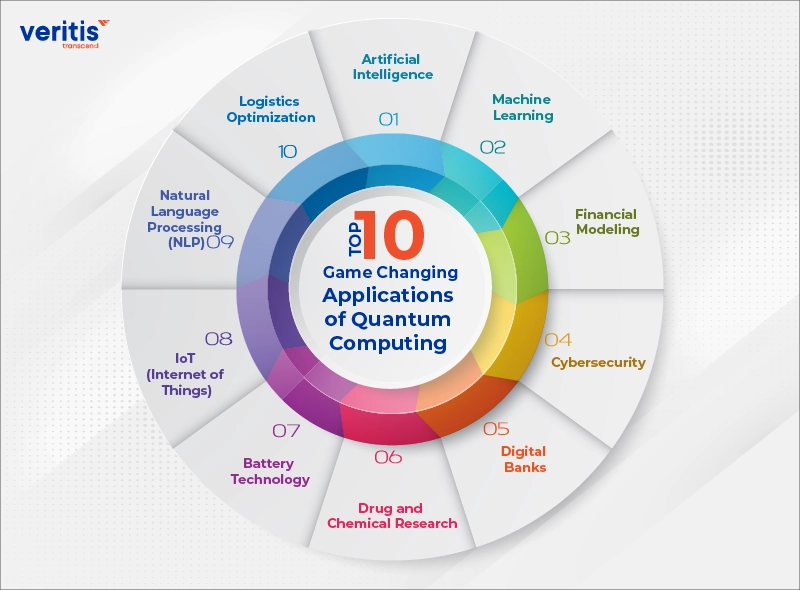
- Portfolio optimization for financial services, balancing risk and returns with unmatched efficiency
- Supply chain management to solve logistics, routes, and inventory challenges
- Risk assessment in financial, insurance, and regulatory environments
- Machine learning for advanced pattern recognition, data analysis, and predictive modeling
- Cryptography to improve privacy and data protection in an era of evolving cyber threats
Quantum Advantage in Business Settings
Companies gain clear benefits by embracing quantum advantage:
- Faster and more accurate problem-solving
- Optimal solutions to highly complex processes
- Enhanced data security with quantum cryptography
- More reliable predictions through quantum-enhanced models
- Substantial cost reduction by optimizing use of resources
Implementation Strategies
Problem Identification
The first step for businesses is to identify where quantum computing is most relevant. Suitable cases include:
- Optimization-heavy problems requiring high processing power
- Large-scale simulations and modeling
- Security systems reliant on advanced encryption
- Predictive data analysis needs with high accuracy
- Resource allocation challenges in multi-layered systems
Solution Development
Building a reliable quantum solution requires a structured approach:
- Choosing the right quantum algorithm for each business use case
- Matching hardware requirements to workload complexity
- Seamlessly integrating quantum software with existing workflows
- Developing robust testing methodologies
- Establishing pilot projects for deployment strategies
Technical Considerations
Quantum Hardware
Businesses interested in quantum computing must account for these infrastructure components:
- Specialized quantum processors capable of qubits and superposition
- Control systems to manage quantum operations
- Cooling infrastructure essential for stable performance
- Error correction mechanisms to enhance reliability
- Integration capabilities to link classical and quantum systems
Quantum Software Stack
A functioning quantum ecosystem requires a flexible software stack:
- Quantum programming languages like Qiskit or Cirq
- Development tools and APIs optimized for hybrid approaches
- Simulation environments to prototype algorithms before deployment
- Testing frameworks for accuracy and resilience
- Scalable deployment platforms, including cloud quantum computing
Business Applications
Financial Services
The financial sector is one of the pioneers of quantum algorithm adoption with applications such as:
- Real-time portfolio optimization
- Powerful risk assessment models
- Fraud detection leveraging quantum machine learning
- Trading algorithms engineered for rapid adaptation
- Market prediction with quantum-enhanced forecasting
Supply Chain Optimization
In supply chain and logistics, quantum computing accelerates:
- Route optimization for cost and time efficiency
- Smarter inventory management models
- Accurate demand forecasting
- Efficient resource allocation across supply networks
- Real-time logistics planning with adaptive modeling
Implementation Challenges
Technical Challenges
Key technical barriers include:
- Current hardware limitations with limited qubits
- Complexity of error correction at scale
- Difficulty in designing advanced algorithms
- Integration issues with classical IT systems
- High costs in early adoption phases
Business Challenges
Enterprises must also confront operational and cultural obstacles:
- Developing new skill sets in quantum expertise
- Managing adoption costs effectively
- Evaluating risk and business ROI
- Leading organizational change management
- Defining clear implementation roadmaps
Case Study: Financial Optimization
A leading financial institution deployed quantum algorithms for portfolio optimization. The results:
- 40% faster optimization cycles
- 25% reduction in resource costs
- Improved risk assessment models
- Enhanced portfolio performance and accuracy
- Stronger data-driven security resilience
Future Trends
The near future promises rapid progress in quantum business applications:
- Quantum machine learning enabling superior AI strategies
- Advanced cryptography protecting against security threats
- Hybrid quantum-classical systems balancing performance and scale
- Industry-specific accelerated solutions for energy, healthcare, and manufacturing
- Cloud-based quantum computing allowing scalable, on-demand innovation
FAQ
What are the main benefits of quantum algorithms in business?
They provide faster problem-solving, superior optimization, advanced cryptography, efficient machine learning performance, and stronger cost management.
How can businesses prepare for quantum computing?
By identifying application areas, building in-house expertise, forming research partnerships, and launching small pilot projects before scaling.
What are the challenges in implementation?
Hardware immaturity, error correction complexity, integration difficulties, high early costs, and lack of skilled professionals.
Conclusion
Quantum algorithms are not just a technological leap; they represent a strategic transformation in business problem-solving. By processing information in entirely new ways, quantum computing allows organizations to reach insights, optimizations, and security levels that traditional computing cannot match. Companies that experiment with quantum solutions today will hold a clear competitive edge tomorrow. With thoughtful adoption strategies, industries can unlock the true potential of this next-generation technology.
Next Steps
To prepare for quantum adoption, businesses should:
- Identify key applications with the greatest ROI potential
- Build internal and partner-driven quantum expertise
- Start with pilot projects for proof of concept
- Plan strategic roadmaps for long-term scalability
For further exploration, see our dedicated Quantum Computing category.