Key Takeaways
- Blockchain provides secure digital identity management
- Decentralized identity solutions enhance privacy and user trust
- Self-sovereign identity gives users full control over their personal data
- Careful implementation strategies are required for scalability and adoption
- Enhanced security, privacy, and reduced fraud drive widespread interest
Introduction to Blockchain Identity
Blockchain technology is transforming digital identity management by introducing systems that are decentralized, secure, and user-controlled. Traditional identity management relies on centralized databases, which are vulnerable to cyberattacks, fraud, and misuse. In contrast, blockchain identity solutions give individuals the ability to own, manage, and control their digital credentials directly. With a focus on privacy protection, user empowerment, and security, blockchain identity systems are increasingly seen as the next frontier for digital trust.
This article explores the core concepts, benefits, implementation strategies, technical considerations, best practices, and use cases of blockchain identity, while also highlighting some of the key challenges organizations face when adopting these technologies.
Understanding Blockchain Identity
Core Concepts
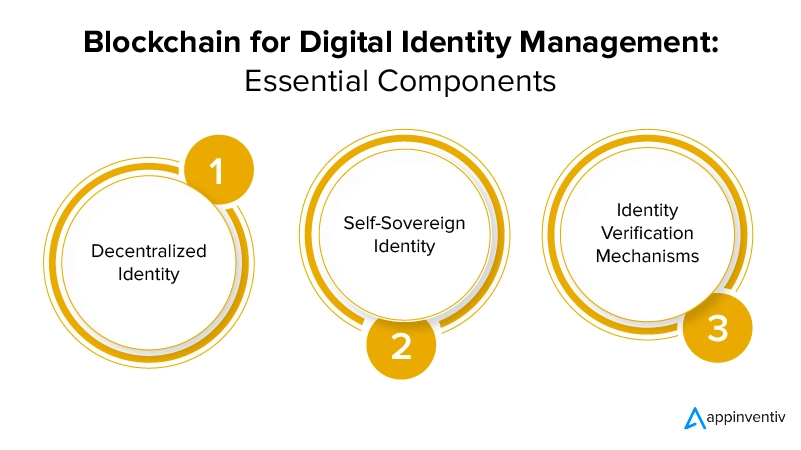
The foundation of blockchain-based identity management rests on several critical concepts:
- Decentralized identity (DID): Built on blockchain to reduce dependence on central authorities.
- Self-sovereign identity: Empowers users to control how their identity data is shared.
- Digital credentials: Secure, tamper-proof records of identity attributes stored on a blockchain.
- Identity verification: Blockchain enables transparent and verifiable verification processes.
- Privacy protection: User information is shared selectively, minimizing exposure.
Benefits of Blockchain Identity
A well-designed blockchain identity framework achieves:
- Enhanced security through cryptographic protections and immutable ledgers.
- User control via ownership of digital credentials.
- Privacy protection with selective disclosure mechanisms.
- Reduced fraud by eliminating fake or duplicated identities.
- Improved trust between users, organizations, and service providers.
Implementation Strategies
Identity Framework
To implement a robust blockchain identity solution, organizations must prioritize:
- Common identity standards for interoperability.
- Trusted verification processes that comply with KYC and AML requirements.
- Privacy controls aligned with regulations like GDPR.
- Multi-layered security measures such as multi-factor authentication.
- Seamless user experience (UX) to encourage adoption.
Technology Integration
Key integration elements include:
- Selection of a blockchain platform with strong security and scalability.
- Adoption of identity protocols such as DID and verifiable credentials.
- Protection against cyber risks with layered security measures.
- Clear and intuitive user interfaces for accessibility.
- System integration with legacy and enterprise systems.
Technical Considerations
Blockchain Platform
When selecting a platform for digital identity on blockchain, critical factors are:
- Robust consensus mechanisms for network trust.
- Smart contracts to automate verification and credential issuance.
- Built-in identity protocols such as SSI frameworks.
- High-level security features to safeguard identity data.
- Ability to scale for millions of users without performance loss.
Identity Management Processes
Core identity components include:
- Simplified user registration for accessibility.
- Transparent, reliable verification procedures.
- Credential management that resists tampering.
- Tailored access control to allow selective data sharing.
- Strong privacy protection mechanisms.
Best Practices for Blockchain Identity
Security Measures
Organizations must adopt:
- Advanced encryption for identity data.
- Strict access control policies.
- Transparent audit trails for accountability.
- Ongoing risk management practices.
- Full compliance with local and global regulations.
User Experience
User adoption depends on:
- Simple registration and onboarding.
- Easy verification using mobile-first approaches.
- Transparent, clear user controls for identity sharing.
- Intuitive privacy options empowering consent-based sharing.
- Full mobile support for accessibility anywhere.
Use Cases
Identity Applications
Practical implementations include:
- User authentication for securing digital accounts.
- KYC verification for banks and financial institutions.
- Access management in enterprises and smart cities.
- Credential verification in institutions like universities.
- Privacy protection in healthcare and government.
Industry Solutions
Blockchain identity adoption spans multiple industries:
- Financial services improve fraud reduction and compliance.
- Healthcare systems secure patient data and prevent leaks.
- Government services streamline citizen identification.
- Education ensures credential authenticity.
- Enterprise IT enhances workforce and partner identity management.
Implementation Challenges
Technical Challenges
- Complex platform selection decisions.
- High integration complexity with existing systems.
- Stringent security requirements.
- Meeting performance and scalability needs.
Operational Challenges
- Encouraging user adoption.
- Adhering to regulatory compliance in various jurisdictions.
- Balancing cost management with ROI.
- Long-term system maintenance requirements.
- Need for team training and skill development.
Case Study: Financial Services
A leading financial institution implemented blockchain-based identity verification and achieved:
- 60% reduction in fraud risk.
- 40% savings in compliance operations.
- Improved user confidence in digital onboarding.
- Faster verification with enhanced security.
Future Trends
The evolution of blockchain identity management points to:
- Advanced privacy technologies like zero-knowledge proofs.
- Cross-chain identity solutions ensuring interoperability.
- AI integration for fraud detection and automated verification.
- Even stronger security layers.
- Wider global adoption across industries.
FAQ
What are the main benefits of blockchain identity?
Enhanced security, better privacy protection, strong user control, and reduced identity fraud.
How can organizations implement blockchain identity?
By building a strong identity framework, integrating proper protocols, and prioritizing security measures.
What are the key challenges in blockchain identity implementation?
The biggest challenges are platform selection, security complexity, and encouraging user adoption.
Conclusion
Blockchain technology presents a powerful solution for digital identity management, promising higher security, improved privacy, and genuine user control. While challenges exist in technical implementation, cost, and adoption, organizations that strategically adopt blockchain identity frameworks can benefit from reduced fraud, stronger compliance, and long-term trust. This decentralization of identity marks a paradigm shift toward secure, user-centric digital ecosystems.