Key Takeaways
- CI/CD automation accelerates software delivery and streamlines DevOps workflows.
- Automated testing ensures code quality throughout the pipeline.
- Pipeline optimization enhances efficiency, collaboration, and reliability.
- Proper planning and strategy are essential for successful implementation.
- Teams adopting CI/CD benefit from faster innovation and reduced deployment risks.
Introduction to CI/CD Automation
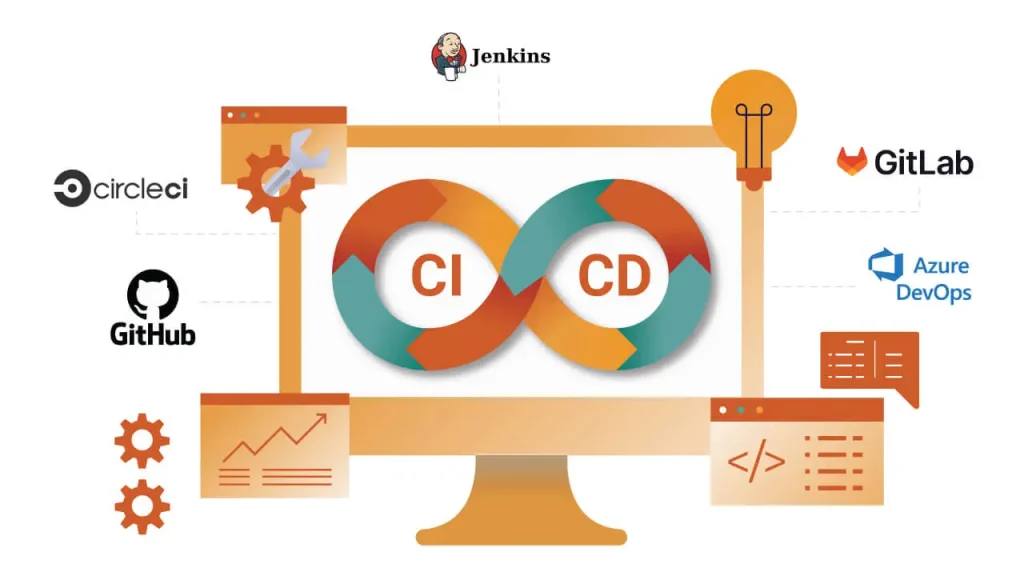
Continuous Integration and Continuous Deployment (CI/CD) has become the backbone of modern DevOps practices. By introducing automation into every stage of the software development lifecycle—build, testing, and deployment—teams achieve faster delivery, improved collaboration, and higher-quality results. Businesses adopting CI/CD pipelines experience reduced downtime, rapid iteration cycles, and confidence in release reliability. This article explores the core components of CI/CD automation, its benefits, implementation frameworks, best practices, use cases, challenges, and future outlook.
Understanding CI/CD Automation
Core Components
The core elements of a successful CI/CD setup include:
- Automated builds: Ensures consistent compilation and packaging of applications.
- Continuous testing: Validates functionality, performance, and security.
- Automated deployment: Pushes code into production or staging environments.
- Pipeline management: Orchestrates all stages from commit to deployment.
- Quality gates: Enforce standards before releases proceed.
Benefits of CI/CD
- Faster delivery: Reduces manual delays and accelerates release cycles.
- Improved quality: Automated test suites detect bugs earlier.
- Reduced errors: Consistent environments reduce human mistakes.
- Better collaboration: Developers, testers, and operations share aligned workflows.
- Enhanced reliability: Continuous monitoring ensures resilient applications.
Implementation Strategies
Pipeline Framework
Effective pipelines include:
- Build automation for compiling and packaging.
- Test automation for quality assurance.
- Deployment automation for predictable releases.
- Monitoring tools for system observation.
- Feedback loops that inform teams about failures quickly.
Technology Integration
Key integration aspects cover:
- Version control systems (Git-based workflows).
- Build tools (Maven, Gradle, or cloud-native build tools).
- Test frameworks (unit, integration, security testing).
- Deployment tools (Kubernetes, Ansible, Terraform).
- Monitoring systems (Prometheus, Grafana, ELK stacks).
Technical Considerations
Build Automation
Successful builds require:
- Source control management
- Reliable build scripts
- Dependency resolution tools
- Secure artifact storage
- Proper versioning
Test Automation
Key testing stages include:
- Unit testing for code correctness
- Integration testing across services
- Performance and load testing
- Security testing for vulnerabilities
- Passing quality gates before release
Best Practices for CI/CD Automation
Pipeline Design
- Modular pipelines with clear stages
- Quality checks at each milestone
- Rollback strategies in case of failures
- Continuous monitoring across environments
Automation Strategy
- Careful tool selection (aligning with enterprise architecture)
- End-to-end process automation for minimal manual intervention
- Strict quality control mechanisms
- Team training for adoption readiness
- Complete documentation for long-term maintainability
Use Cases
Development Workflows
CI/CD automation supports:
- Continuous code integration and testing
- Automated deployment to staging and production
- Quality assurance validation before release
- Post-deployment performance monitoring
Industry Solutions
Applied widely across industries for:
- Software development firms accelerating product cycles
- Web application deployments on cloud-native platforms
- Mobile app continuous delivery for frequent updates
- Enterprise systems adopting secure, reliable operations
Implementation Challenges
Technical Challenges
- Tool and system integration complexity
- Environment provisioning across different stages
- Scaling test automation coverage
- Complex deployment orchestration
- Performance tuning of pipelines
Operational Challenges
- Gaining team adoption for new processes
- Restructuring development workflows
- Allocating infrastructure and resource budgets
- Maintaining documentation across DevOps pipelines
Case Studies
Enterprise Transformation Example:
One major enterprise that adopted CI/CD automation reported:
- 80% reduction in delivery times
- 60% fewer deployment errors
- Noticeable improvements in release quality
- Stronger collaboration across teams
- Increased system reliability
This illustrates how CI/CD automation in DevOps fundamentally transforms business outcomes.
Future Trends
Emerging CI/CD automation developments include:
- AI-powered pipelines that predict errors and optimize tests.
- Advanced automation tools for zero-touch deployments.
- Enhanced monitoring systems integrating real-time observability.
- Better tool ecosystems to unify source control, builds, and infra management.
- Continuous improvements in DevOps practices aligning with cloud-native and microservices infrastructures.
FAQ
What are the benefits of CI/CD automation?
Faster software delivery, higher quality, reduced human errors, collaborative team workflows, and improved system reliability.
How can teams implement CI/CD automation?
By designing modular pipelines, selecting the right tools, automating processes, and providing training.
What are the main challenges in implementation?
Technical difficulties with tool integration, test automation, and deployment complexity, along with operational hurdles in team adoption and resource allocation.
Conclusion and Next Steps
CI/CD automation is revolutionizing DevOps practices worldwide. Organizations that invest in strong automation pipelines see measurable improvements in delivery speed, quality, and collaboration. To adopt CI/CD effectively:
- Design modular pipelines built with automation in mind.
- Select appropriate tools aligned with your tech stack.
- Automate processes consistently to reduce manual errors.
- Train your teams to adapt to automated workflows.
By implementing these strategies, companies can harness the full potential of continuous integration, continuous deployment, and DevOps automation.