Key Takeaways
- Real-time analytics at the edge allows instant data processing and fast insights.
- Local data processing reduces latency and bandwidth costs.
- Edge analytics enables better decision-making through timely information.
- Businesses achieve improved operational efficiency and optimized resource utilization.
Introduction to Edge Analytics
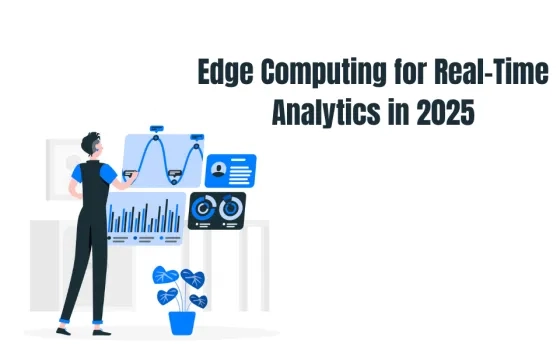
Edge analytics is revolutionizing real-time data processing by bringing computation and analysis closer to where data is generated. Instead of sending massive amounts of raw data to centralized cloud servers, organizations process information at the edge — near IoT devices, sensors, and machines. This shift enables faster insights, reduces dependence on costly bandwidth, and improves operational efficiency across industries.
Understanding Edge Analytics
Core Concepts
At its foundation, edge analytics combines multiple technologies to empower real-time decision-making:
- Local data processing at or near the device
- Instant, real-time analysis before sending results to the cloud
- Distributed computing across multiple edge devices
- Smart data filtering to reduce noise and transmit only critical information
- Aggregation of results for broader operational analysis
Benefits of Edge Analytics
Key advantages include:
- Reduced latency, enabling immediate responses to events
- Lower bandwidth costs by minimizing unnecessary data transmission
- Enhanced privacy by processing sensitive data locally
- Improved reliability even with intermittent network connectivity
- Better scalability for large-scale IoT and industrial deployments
Implementation Strategies
Data Processing Pipeline
For effective edge analytics, organizations must design efficient pipelines:
- Data collection methods through sensors, devices, and IoT systems
- Processing algorithms tailored to local workloads
- Local and distributed storage requirements
- Advanced analysis techniques for reliable insights
- Result distribution via dashboards, APIs, or cloud synchronization
Analytics Framework
Essential elements of an edge analytics strategy include:
- Processing engines for real-time workloads
- AI and machine learning models deployed at the edge
- Visualization tools for actionable insights
- Continuous monitoring systems for performance
- Integration capabilities with enterprise infrastructure
Use Cases and Applications
Industrial Applications
- Predictive maintenance reduces downtime and increases equipment lifespan
- Quality control ensures consistent output using real-time data checks
- Process optimization enhances productivity and reduces waste
- Asset tracking increases efficiency and reduces losses
- Performance monitoring improves decision-making for factory operations
Commercial Applications
- Customer analytics provides better personalization and real-time offers
- Inventory management ensures stock optimization and reduces shortages
- Supply chain optimization improves logistics and minimizes inefficiencies
- Security monitoring provides faster responses to threats
- Resource allocation ensures efficient energy and personnel usage
Technical Considerations
Infrastructure Requirements
To succeed, businesses must consider:
- Adequate processing power for analytics workloads
- Storage capacity for local and pre-filtered data
- Reliable and secure network connectivity
- Effective power management for edge devices
- Cooling systems for data-intensive hardware
Software Architecture
Modern edge architectures typically include:
- Microservices for modular application deployment
- Containerization for flexibility and portability
- Secure and scalable data pipelines
- AI-enabled analytics engines
- Management tools for orchestration and monitoring
Performance Optimization
Processing Efficiency
Optimization techniques enhance speed and reliability:
- Data compression to conserve bandwidth
- Batch processing for efficiency
- Parallel computing to handle high-volume workloads
- Intelligent resource allocation
- Cache management for faster access
Resource Management
Efficient resource usage lowers costs and energy demands:
- Load balancing across devices
- Power-efficient designs
- Optimized storage management
- Network utilization strategies
- Comprehensive cost management
Security and Privacy
Data Protection
Strong security is critical at the edge:
- Encryption for transmitted and stored data
- Access control for device and application security
- Data anonymization for privacy compliance
- Secure protocols for safe communication
- Regular audits to detect vulnerabilities
Compliance
Businesses must also meet regulatory responsibilities:
- Data privacy laws such as GDPR
- Industry-specific standards for healthcare, finance, etc.
- Security requirements for IoT ecosystems
- Complete audit trails and thorough documentation
Case Study: Retail Analytics
A retail chain implemented edge analytics and achieved significant results:
- 50% faster decision-making on store operations
- 35% reduction in infrastructure and bandwidth costs
- Optimized inventory management to reduce shortages
- Enhanced customer experience with personalized offers
- Better resource allocation across retail branches
Future Trends
The future of edge analytics continues to expand with:
- AI-powered analytics for smarter predictions
- 5G integration delivering ultra-low latency
- Advanced visualization techniques with AR/VR
- Autonomous systems making independent decisions
- Edge-native applications purpose-built for distributed environments
FAQ
What are the main benefits of edge analytics?
Faster insights, lower costs, higher reliability, and stronger privacy security.
How does it improve decision-making?
By enabling real-time data processing at the source, edge analytics reduces delays and provides accurate information immediately.
What factors should organizations consider?
Infrastructure capacity, data pipeline design, security protocols, and long-term scalability.
Conclusion
Real-time edge analytics is transforming how organizations process, analyze, and act on data. By moving analytics closer to the source, companies unlock faster insights, reduce operational costs, safeguard sensitive information, and build more resilient systems. With advancements in AI, IoT, and 5G integration, edge analytics is set to become a cornerstone of digital strategy for industries worldwide.